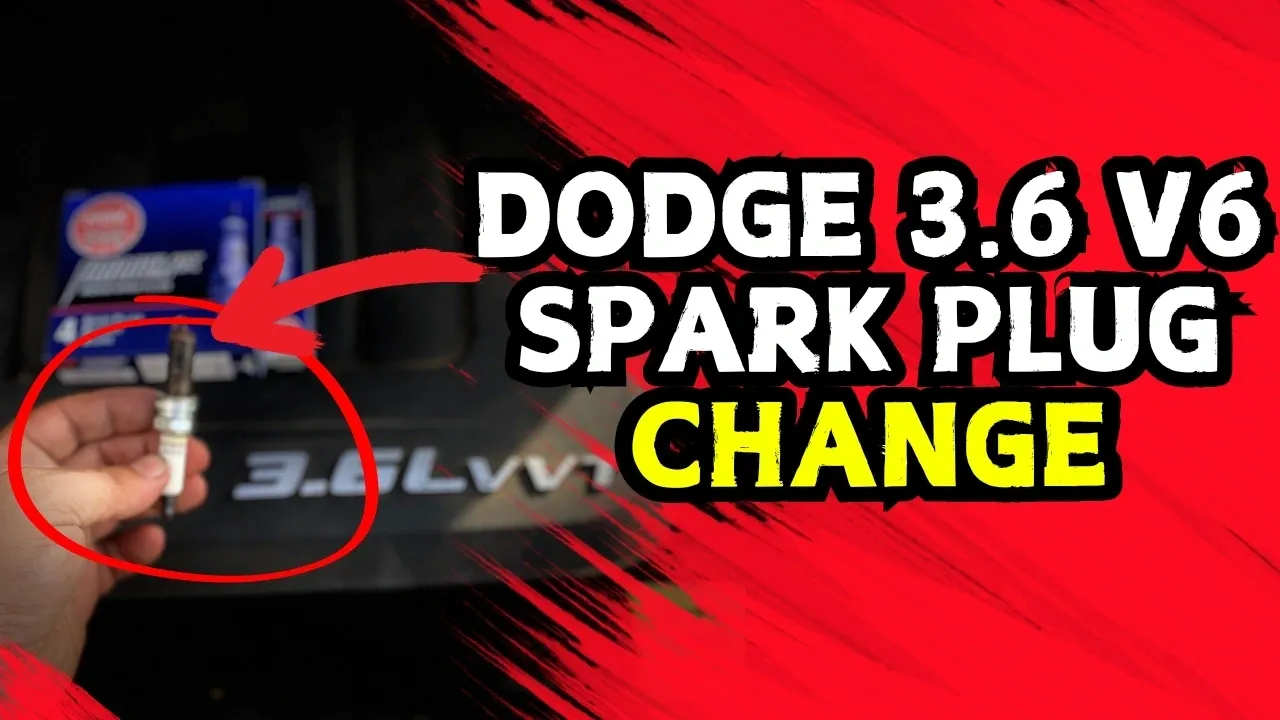
If you’re looking to change the spark plugs on your 3.6L Dodge engine, you’re in the right place. This engine is common in many Dodge vehicles, and with the right tools and a little patience, you can tackle this project at home. Follow this step-by-step guide to ensure a smooth spark plug replacement process. Watch full video guide HERE.
Step 1: Remove the Engine Cover
The first thing you’ll need to do is remove the beauty cover that sits over the engine. This cover is held in place by three grommets. Gently pull it up to pop it off, releasing it from the attachment points.
Step 2: Disconnect Components and Hoses
- Remove Bolts: You’ll need to remove two bolts, one on each side of the engine, using an 8mm socket.
- Disconnect the Flexible Hose: A hose runs across the top of the engine. To prevent any damage, use a screwdriver to gently remove the hose, and be sure to unclip the connector carefully. If needed, use a pick tool and screwdriver to pry the clips free.
- Move the Transition Airbox: Pull the airbox away from the throttle body by lifting it upwards. This will give you access to the back three coils.
Step 3: Access the Spark Plugs
- Move the Radiator Hose: Use a clip remover to move the radiator hose out of the way. Also, pull up the dipstick and tuck it aside to get better access to the bolts.
- Remove Intake Bracket: There’s a 10mm bolt and a 13mm bolt holding the intake runner in place. Remove these to make room for accessing the spark plugs.
Step 4: Remove the Intake Runner
- Undo T20 Screws: The intake runner is secured by seven T20 screws. Remove them to detach the intake runner.
- Cover the Intake: Lay a clean towel over the intake manifold to prevent any debris from falling into the engine.
Step 5: Remove Spark Plugs
- Inspect the Coil Packs: After removing the intake runner, take out the foam insulation and clean the area around the coil packs.
- Remove the Spark Plugs: Use a spark plug socket to remove the old spark plugs. If the socket doesn’t catch, use a tool to grab the plug.
Step 6: Install New Spark Plugs
- Choose the Right Plugs: In this case, NGK laser iridium spark plugs were used, but make sure you buy pre-gapped spark plugs to ensure a proper fit.
- Apply Anti-Seize: Put a small amount of anti-seize on the threads before carefully inserting the new spark plug into the cylinder.
- Torque the Spark Plugs: Hand-tighten the spark plugs, then torque them to 12 lb-ft.
Step 7: Inspect and Replace Gaskets
While you have everything disassembled, inspect the cylinder head and intake gaskets. If the gaskets show signs of wear, it’s a good idea to replace them at this stage.
Step 8: Reassemble the Engine
- Crisscross Pattern for Bolts: When tightening the runner screws, use a crisscross pattern to ensure even pressure. Do not use power tools for this step to avoid over-tightening.
- Reinstall the Side Brackets: Reinstall the brackets with the screws and bolts removed earlier.
- Replace the Intake Components: Reattach the airbox and hoses in the reverse order of removal, making sure everything is properly lined up.
Step 9: Clean and Replace the Air Filter
While you have the airbox open, check the condition of the air filter. Clean or replace it as necessary. Line up the airbox components carefully, making sure the ridges align.
Step 10: Final Checks and Reinstallation
- Reinstall Engine Cover: Once everything is back in place, align the engine cover with the grommets and press it down until it clicks into place.
- Reconnect All Hoses and Clips: Don’t forget to reconnect the hose that runs from the airbox to the engine, as well as any clips you removed during the process.
Conclusion
By following these steps, you can successfully change the spark plugs on a 3.6L Dodge engine. This project not only helps maintain engine performance but can save you money compared to taking your car to a shop. Just make sure to take your time, follow each step carefully, and always double-check your work before starting the engine again.
Watch full video guide HERE.