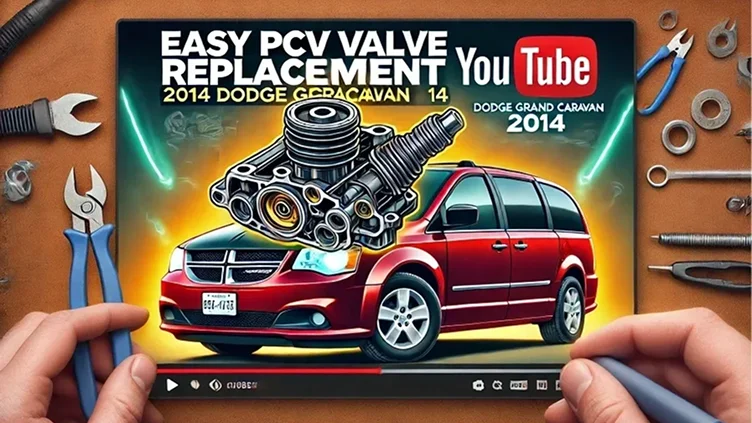
If you own a 2014 Dodge Caravan with a 3.6L Pentastar engine, regular maintenance is crucial to ensure your vehicle runs smoothly. One essential maintenance task is replacing the Positive Crankcase Ventilation (PCV) valve. In this guide, I’ll walk you through the simple process of changing the PCV valve, which can be done in just a few minutes with minimal tools. Watch the full video guide HERE
Tools You’ll Need:
- Flathead screwdriver
- T20 Torx bit with an extension
Replacing the PCV valve is recommended every 100,000 miles, but I suggest doing it a bit sooner, around 50,000 miles, to avoid potential issues.
Step-by-Step Guide:
- Locate the PCV Valve:The PCV valve on the 2014 Dodge Caravan is located at the back of the engine. Depending on your engine’s configuration, it might be in a slightly different location, but for this model, it’s typically at the rear.
- Remove the Hose:The hose connected to the PCV valve needs to be removed to access the valve. Carefully move the hose out of its holder, breaking it loose if necessary, and pull it up and away.
- Disconnect the Valve:Use a flathead screwdriver to disconnect the electrical connection near the valve. This will give you access to the screws holding the valve in place.
- Remove the Screws:There are two screws securing the PCV valve: one at the top and one at the bottom. Use the T20 Torx bit with an extension to remove them.
- Replace the PCV Valve:Once the old valve is removed, place the new PCV valve in the same orientation, ensuring the vent is facing upwards. Insert the screws and tighten them securely.
- Reassemble:After installing the new valve, reconnect the hose and any other components you removed. Make sure everything is back in place and securely fastened.
Why It’s Important to Replace the PCV Valve
The PCV valve plays a crucial role in regulating the pressure within the engine’s crankcase. Over time, the valve can become clogged or stuck, leading to several issues:
- Check Engine Light: A malfunctioning PCV valve can trigger the check engine light.
- Blown Gaskets: If the valve remains closed, excessive pressure can build up, potentially causing gaskets to blow.
- Rough Idling: A faulty PCV valve can lead to rough idling due to improper pressure regulation.
- Oil Consumption Issues: If the valve is stuck open, it can cause oil to be sucked into the intake, leading to increased oil consumption and potential damage to the catalytic converter.
Replacing the PCV valve is a cost-effective way to prevent these issues. While you can extend its life by cleaning it with brake cleaner, it’s best to replace it every 50,000 miles to ensure your engine remains in optimal condition.
Final Thoughts
Maintaining your vehicle’s PCV valve is an easy and inexpensive task that can save you from more costly repairs down the road. If this guide was helpful, consider giving the accompanying video a like and sharing it with others who might benefit. Regular maintenance, like replacing the PCV valve, is key to keeping your Dodge Caravan running smoothly for years to come.
Watch the full video guide HERE