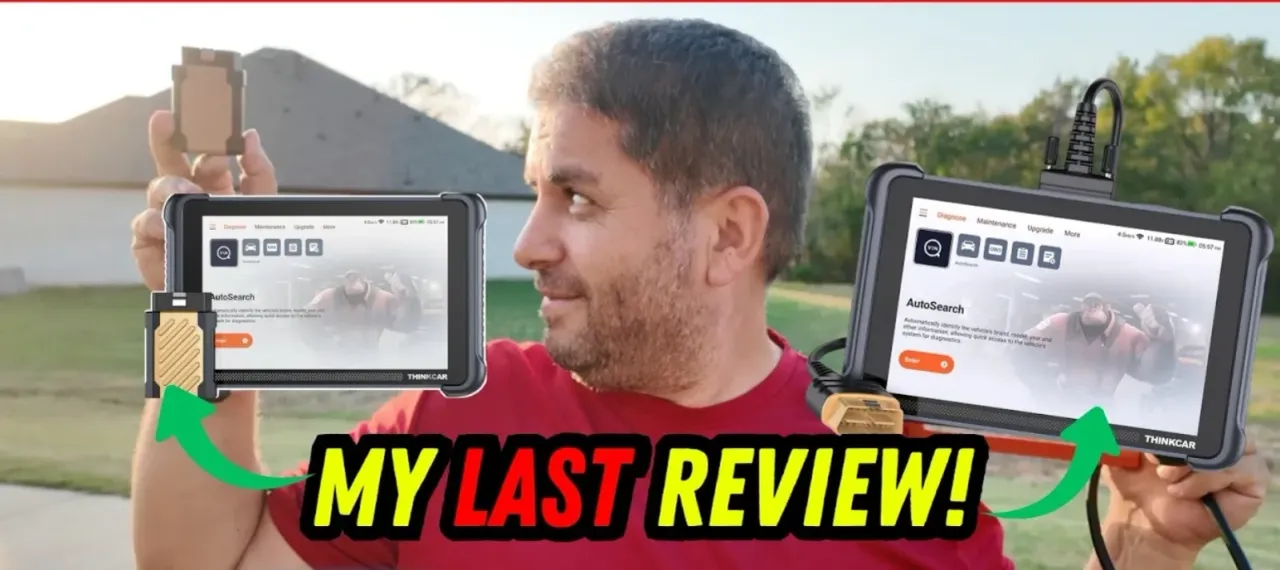
In the world of automotive diagnostics, scan tools are indispensable. But with so many options ranging from a couple of hundred to thousands of dollars, choosing the right one can be daunting. This review dives into the Thinkcar 689 and its Bluetooth counterpart, the 689BT, highlighting their features, differences, and why they might be the perfect fit for you.
The Lifetime Update Advantage
One of the biggest pain points for scan tool users is the recurring yearly fees for updates. The Thinkcar 689 series stands out by offering lifetime updates, a significant advantage that eliminates those continuous costs. This means you won’t get “slapped yearly with fees,” making it a truly cost-effective solution in the long run.
Wired vs. Bluetooth: What’s the Difference?
Both the 689 wired and 689BT (Bluetooth) versions come in the same dimension box and include a soft-shell case, a USB-C cable, three different tips for the power brick, and an owner’s manual. However, the Bluetooth version offers a few key additions:
- DOIP Adapter: The 689BT includes an adapter for Diagnostics over Internet Protocol (DOIP), which is essential for newer vehicles like Jaguars. This allows for an ethernet connection to the vehicle.
- Wireless Freedom: The most obvious difference is the wireless capability of the Bluetooth version. This allows you to work comfortably in your garage, even if it’s hot or cold outside, without being tethered to the vehicle.
- Vehicle Communication Interface (VCI): The 689BT features a VCI that snaps into place, providing a clean and cool aesthetic.
Despite these differences, both units share core specifications: an 8-inch display, 4GB of RAM, and 64GB of storage. Updating the software is also incredibly easy, done with just a click of a button.
User Experience and Key Features
Both scan tools boast a new design with a robust kickstand and a user-friendly interface. Navigation is simple, with clear options for diagnose, maintenance, upgrades, and more. For professionals, a list view is available for quicker access to functions.
Noteworthy Differences in Operation:
- Vehicle Voltage Display: The wired version displays the vehicle’s voltage directly on the screen, which is crucial for troubleshooting as low voltage can affect diagnostic accuracy. The wireless version only shows that it’s connected, lacking this immediate feedback.
- Battery Charging: The wired version charges its battery while in use from the vehicle, whereas the Bluetooth version, with its 4,150 mAh battery, does not. This means the 689BT’s battery will degrade over time, a consideration for frequent users.
Troubleshooting Capabilities: Toyota vs. Dodge
The video demonstrates the scan tools’ capabilities with a Toyota and a Dodge, highlighting that diagnostic strategies can vary significantly between car makes.
- Toyota (Fuel Cut Off): On a Toyota, the 689BT successfully allowed for individual cylinder fuel cut-off tests, a valuable feature for identifying misfires.
- Dodge (Misfire Counts): Troubleshooting a Dodge proved more challenging. The fuel cut-off option was not available, and crucially, there was no direct misfire count display in live data. The workaround involved using OBD2 Mode 6 (Onboard Monitoring Tests) to find misfire data per cylinder. This emphasizes that even with advanced tools, some vehicles require different approaches.
Online Services and Support
The online services for the Thinkcar 689 series have improved, with a functional feedback request button. You can even scan a QR code to have a text conversation with a technician, which is a convenient feature. However, be aware that technical support response times can be slow, sometimes taking up to 72 hours for a canned response. It’s advisable to submit requests well in advance of your repair.
Is There a Perfect Scan Tool?
The video makes it clear: there’s no such thing as a perfect scan tool, regardless of the price. Even a $1,600 scan tool demonstrated limitations, such as not having a “Power Balance” mode for all makes (Dodge, in this case). This reinforces the idea that understanding your vehicle and the tool’s capabilities is key.
Randomfix Tool Grade and Recommendation
The Thinkcar 689 series receives a “Randomfix tool grade” of 85 out of 100, a slight improvement over the wired version due to enhanced help functions.
- For Home DIY Mechanics: The wired version is an excellent choice if you use a scan tool once or twice a year.
- For Enthusiasts and Professionals: The Bluetooth version is highly recommended if you tinker with your vehicles frequently or are a professional mechanic. Its wireless freedom and included DOIP adapter make it a versatile option.
Both units support essential features like FCA authorization bypass cables for newer Chrysler, Dodge, or Jeep vehicles, and CAN FD for newer GM vehicles, ensuring broad compatibility. The lifetime updates make these scan tools a “no-brainer” for their price point.
For a more in-depth look at operating the wired version, check out the original review video.
▶️ You can watch the full video review here: https://youtu.be/hE6pRJ6n9M4
▶️ See updated Ai version with same great features https://youtu.be/q7QxnGdRL7s
Where to buy
▶️ Wired 689 Version https://bit.ly/TC689RF use discount code ” RANDOMFIX ” for 20% off
▶️ Wireless 689 BT Version https://bit.ly/TC689BTRF use discount code ” RANDOMFIX ” for 20% off