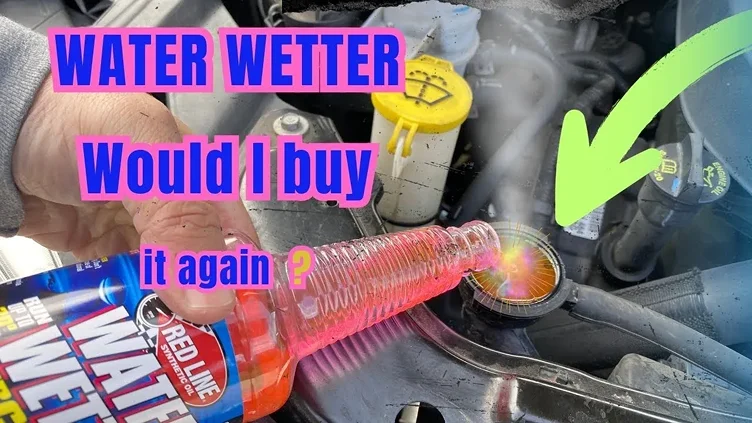
Today, we’re diving deep into a product that’s been generating a lot of buzz in automotive circles: Water Wetter. As temperatures soar, especially here in Texas where it hit a scorching 111°F, managing your vehicle’s coolant system becomes paramount. So, does Water Wetter really live up to its claims of cooling your vehicle by up to 20°F? Let’s find out! Watch full video guide HERE.
Understanding Water Wetter
Water Wetter is a coolant additive manufactured by Redline. Its primary function is to enhance the heat transfer properties of your cooling system. According to its packaging, Water Wetter can:
- Double the wetting ability of water
- Improve heat transfer
- Reduce cylinder head temperatures
- Decrease rust and corrosion
- Clean and lubricate water pump seals
With such bold claims, it certainly piqued my interest, especially after noticing my vehicle’s temperature creeping up while idling with the AC on.
The Experiment
Equipped with a scan tool to monitor coolant temperatures, I started the experiment at a sweltering 212°F. After letting the vehicle cool overnight, I added Water Wetter to my coolant reservoir. The directions recommended a careful measurement, but I opted to add a generous amount to see if there would be a noticeable difference.
Once added, I reset my trip meter and hit the road.
Initial Results
After driving with Water Wetter in the system for a while, I recorded coolant temperatures at various points. Interestingly, despite the extreme outdoor conditions, I noticed some fluctuations, but nothing significant enough to definitively claim the product was delivering on its promises.
Long-Term Use
Fast forward several months and thousands of miles later, I found myself driving in much cooler weather. I had left Water Wetter in the system throughout this period, and while my vehicle still operated fine, I began to question whether the additive was truly beneficial.
Key Takeaways from My Experience
- Effectiveness: While Water Wetter might provide some benefits in specific racing conditions, I found it less impressive for daily driving. The coolant system is designed to function effectively with standard coolant mixtures, and adding Water Wetter didn’t seem to make a notable difference.
- Potential Downsides: I came across older reviews highlighting issues like black sludge formation when Water Wetter was used. This raised concerns about long-term effects on the cooling system.
- Application Matters: For racing scenarios where vehicles operate at extreme conditions, Water Wetter may shine. However, for everyday vehicles that already utilize a proper coolant mix, the advantages seemed minimal.
Final Thoughts
After thorough consideration, I wouldn’t recommend adding Water Wetter to a standard daily driver’s coolant system. Its effectiveness is largely dependent on the specific conditions under which it is used. For those with racing applications, it might be worth a shot, but for routine driving, stick with a high-quality coolant mix.
If you’ve tried Water Wetter, I’d love to hear your experiences! Share your stories, and let’s discuss the applications you’ve used it in. Your feedback could be invaluable for others considering this product.
Thanks for reading, and stay cool out there!
Watch full video guide HERE.