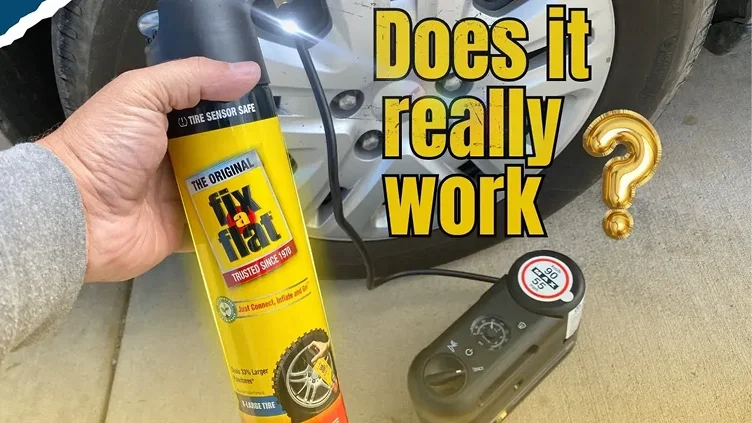
When it comes to dealing with a flat tire, convenience and speed are key. Enter Fix-A-Flat, a popular tire sealant that promises to quickly seal leaks and get you back on the road. Recently, I put this product to the test on my vehicle, which had a low tire pressure warning of just 13 PSI. Here’s what I found out about its effectiveness and usability. Watch the full video guide HERE.
The Setup
I was in Dallas when my tire pressure warning light came on. With no visible punctures or nails, I decided it was the perfect opportunity to see if Fix-A-Flat could live up to its claims. The recommended tire pressure for my vehicle is around 36 PSI, and since I was running low, I prepared to add the sealant.
How to Use Fix-A-Flat
Using Fix-A-Flat is straightforward:
- Position the Valve Stem: Make sure the valve stem is at the 6 o’clock position.
- Shake the Can: Shake the can for about 30 seconds to mix the contents well.
- Attach the Nozzle: Carefully connect the nozzle to the valve stem, breaking the tab to release the sealant.
- Inflate the Tire: As you apply the sealant, it’s essential to have an air compressor on hand, especially if your tire pressure is very low.
Important Considerations
While I was using the sealant, I noticed that the can leaked a bit of air during the attachment process. This could be a concern if you’re dealing with a significantly low tire. Also, I opted for a larger can since it has more air pressure to assist with inflation, which is crucial in emergencies.
The Drive
After adding the sealant, I inflated the tire with my portable air compressor and took the vehicle for a drive. I followed the instructions to drive for at least 2 to 4 miles, allowing the sealant to properly distribute and seal any potential leaks.
The next morning, I checked the tire pressure. Amazingly, the tire was holding air and had no warning lights on the dashboard. After driving around for several weeks and over 3,600 miles, I was pleased to report that the tire remained intact and functional.
The Verdict
After extensive use, I can say that Fix-A-Flat does work under certain conditions. It effectively sealed what I suspect was a small leak, allowing me to drive without any significant issues. Here are some key takeaways from my experience:
- Great for Small Leaks: If you have a minor leak, Fix-A-Flat is a viable solution that can save you from being stranded.
- Not a Permanent Fix: For larger punctures or sidewall damage, it’s advisable to seek professional repair at a tire shop.
- TPMS Safe: The product is safe to use with Tire Pressure Monitoring Systems, so you don’t have to worry about damaging any sensors.
- Keep an Air Compressor Handy: The sealant alone may not inflate your tire sufficiently, so a portable air compressor is essential.
Final Thoughts
While I had positive results with Fix-A-Flat, I must emphasize that it’s not a replacement for proper tire maintenance. If you encounter a nail or a significant tear, getting a professional repair is crucial. I recommend carrying Fix-A-Flat in your vehicle along with a portable air compressor for emergencies.
If you have your own experiences with Fix-A-Flat or similar products, please share them in the comments below. Together, we can learn more about effective tire maintenance and repairs!